
Music As A Monument
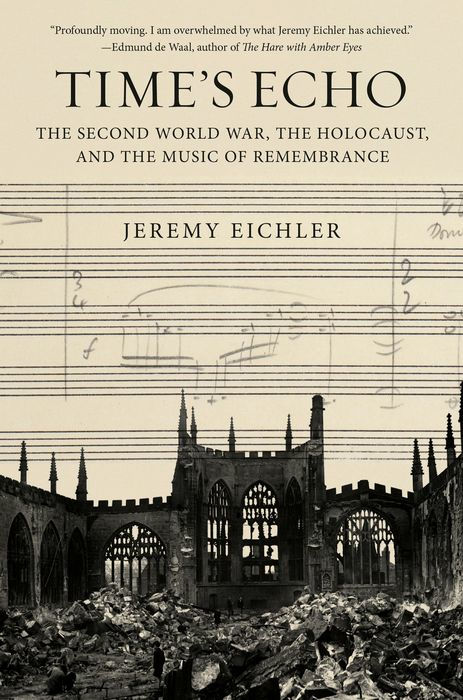
There has been no shortage of great books that I have read in my book club this year. The book I found the most compelling of 2025 was Time’s Echo by Jeremy Eichler who is an American music critic and cultural historian. It is the antithesis of light reading, to say the least, but it is exceedingly moving and worthwhile. For 18 years Eichler served as chief classical music critic of The Boston Globe. Jeremy Eichler’s 2015 doctoral dissertation, for which he received a PhD in history at Columbia University, was “The Emancipation of Memory.” His thesis focuses on Arnold Schoenberg’s A Survivor from Warsaw, a musical memorial to the Holocaust.
A Survivor from Warsaw is one of four classical compositions that Jeremy Eichler describes as a musical memorial in Time’s Echo. The book makes a case that music has the capacity to serve as a vessel for collective memory, bearing witness to historical traumas such as World War II. The first musical 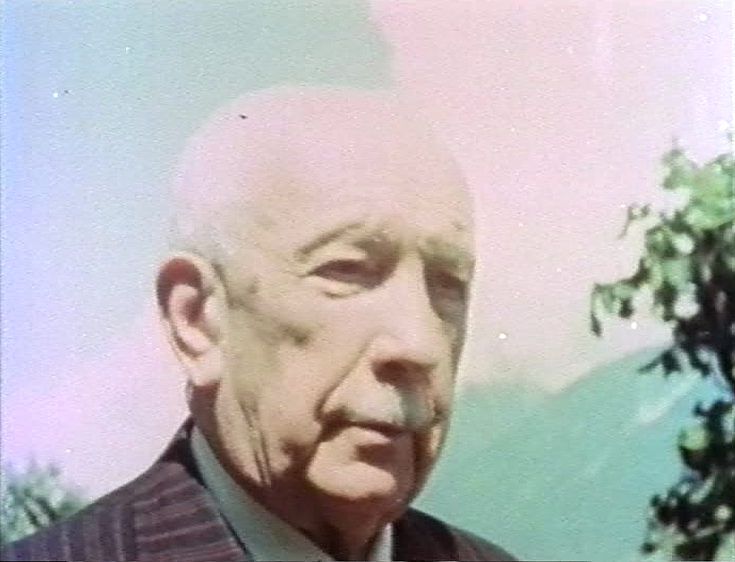 memorial Eichler investigates is Metamorphosen for 23 solo strings by Richard Strauss. Composed in the mid 1940’s, Metamorphosen was commissioned by the Swiss conductor Paul Sacher to whom the work is dedicated. Composing Metamorphosen, A Mourning for Munich, pushed Richard Strauss to perhaps finally notice and process his accumulated grief over the events and devastation of the war. The final blow for Strauss came with the dissolution of the Munich Court Orchestra, aka Bavarian Court Opera—an ensemble in which his father had served as first horn for nearly fifty years. Strauss himself had grown up immersed in its concerts, attended landmark premieres under its auspices, and later held prominent conducting posts with the same institution. Strauss said, “The burning of the Munich Hoftheater was the greatest catastrophe which has ever been brought into my life, for which there can be no consolation and, in my old age, no hope.”
Jeremy Eichler describes Arnold Schoenberg’s A Survivor from Warsaw as the first major musical memorial to the Holocaust. The work was inspired by the stories told by survivors of the purge of Polish Jews during WWII. It dramatizes the harrowing experience of Jewish prisoners in the Warsaw Ghetto who, as they were being rounded up by German soldiers, defiantly sang the Jewish prayer Shema Yisrael, in a final act of solidarity and  resistance. The work, which runs around 7-10 minutes, was premiered on November 4, 1948, in Albuquerque, New Mexico. A Survivor from Warsaw had originally been commissioned by the Koussevitzky Foundation, but for whatever reason there had been a delay in getting the work performed. Austrian conductor Kurt Frederick who made a life for himself in New Mexico, humbly asked Arnold Schoenberg if it would be okay for his semi-amateur orchestra to perform A Survivor from Warsaw. Schoenberg said yes! Little did Kurt Frederick know at the time that he would be leading the Albuquerque Civic Symphony Orchestra with a chorus of cowboys in the premiere of A Survivor from Warsaw.

In Time’s Echo, Jeremy Eichler explores two additional musical memorials, Britten’s War Requiem and the Symphony No. 13 Babi Yar by Shostakovich. Commissioned for the consecration of the newly rebuilt Coventry Cathedral in Warwickshire which was destroyed in World War II, Britten’s War Requiem intertwines the traditional Latin Mass with poet and soldier Wilfred Owen’s World War I poetry. The monumental work plays out in a powerful dialogue between faith and conflict. First performed on May 30, 1962, Benjamin Britten’s War Requiem featured soloists soprano Heather Harper, tenor Peter Pears, Britten’s music and life partner, and baritone Dietrich Fischer-Dieskau who recalled the experience as overwhelming. The renowned baritone said the performance was one of the most important artistic experiences of his career, but he felt emotionally undone by the end recalling the past suffering and the deaths of family and friends.
One of the remarkable things about Time’s Echo, is that Jeremy Eichler went out of his way to travel to and explore most if not all of the locations he  mentions in the book. His vivid descriptions give the reader a strong sense of place, making the events feel more immediate and personal. For the last musical memorial, the author visited the location of the massacre site outside Kyiv, the Babi Yar ravine. Shostakovich’s Symphony No. 13, Babi Yar is in a way a double memorial as the inspiration came from the poem “Babi Yar” written by Yevgeny Yevtushenko after he had visited the site and found there was no memorial marker of any kind. The poem evokes the Nazi massacre of some 34,000 Jewish men, women, and children in the Babi Yar ravine in September 1941, and it addresses the Soviet government’s suppression of information about the massacre. Both Yevtushenko‘s poem “Babi Yar” and the Symphony No. 13 by Shostakovich serve as poignant and forceful condemnations of anti-Semitism in Russia and beyond. Despite attempts by Soviet authorities to suppress the work, the premiere was a success and was met with thunderous applause.
Interestingly enough, to me, Dmitri Shostakovich and Benjamin Britten were friends. Their long-distance friendship began after they had been introduced to each other by a mutual friend, cellist Mstislav Rostropovich. Shostakovich would dedicate his 14th Symphony to Britten, and Britten dedicated his opera The Prodigal Son to Shostakovich. In the early 1960’s while composing their own musical memorials featured in Time’s Echo, Britten and Shostakovich corresponded and encouraged one another.